Launches
NO DATA0MISSIONS
The launch archive is still being mirrored, so this day has no launches listed yet.
ARCHIVE // DAY OF YEAR
Wikipedia records 1 spaceflight and astronomy event on August 26. Below are the pictures NASA published on August 26 in 5 different years — each one taken or released on this exact date.
0MISSIONS
The launch archive is still being mirrored, so this day has no launches listed yet.
1ENTRY
Spaceflight and astronomy entries from Wikipedia's record of this date, oldest first — from 1998 onward.
5IMAGES
NASA's Astronomy Picture of the Day for August 26, one per year. Some are public domain and some belong to the photographer — each says which.
NASA’s Astronomy Picture of the Day, for this calendar date in each of the last several years.
2026
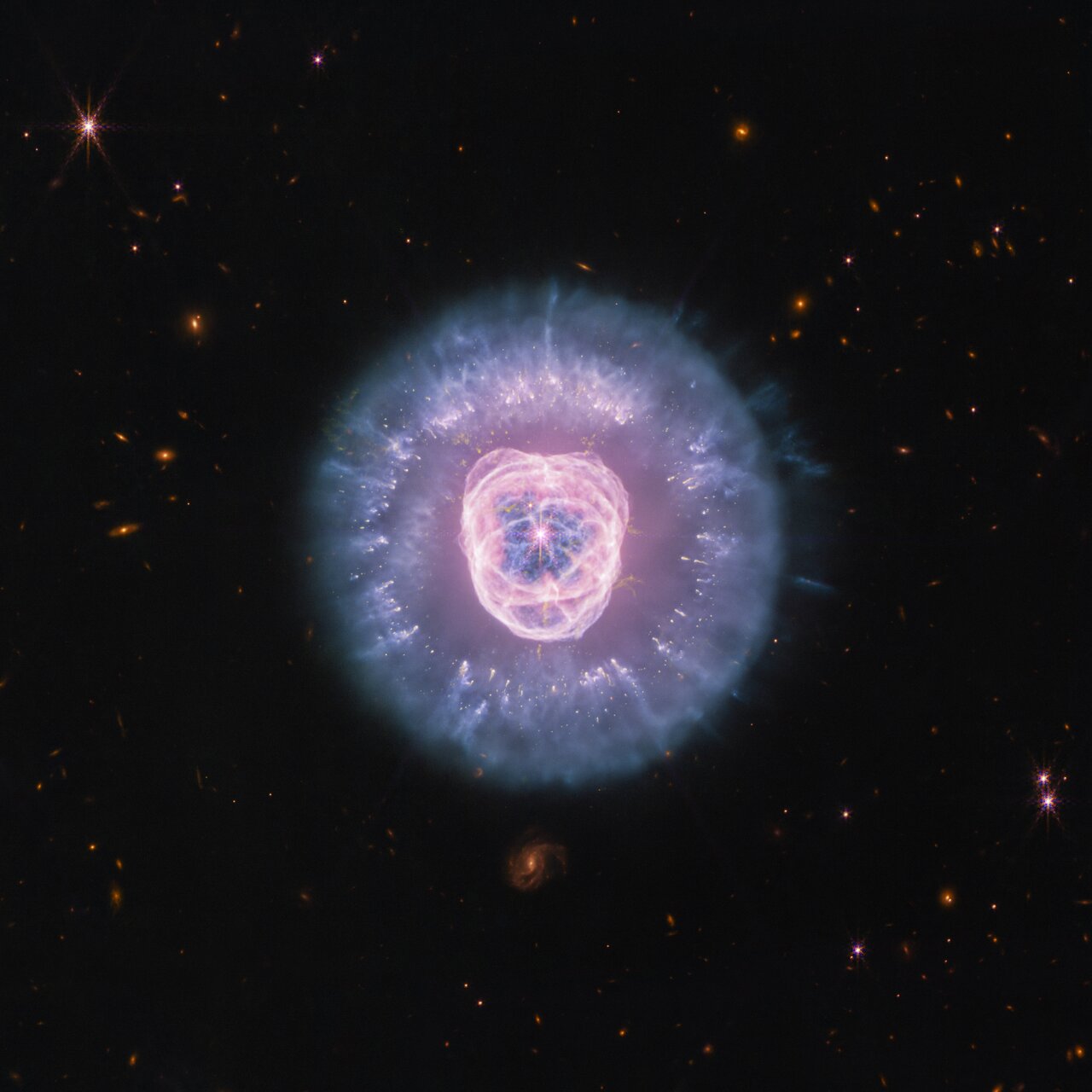
Are we looking at the future of our Sun? The James Webb Space Telescope captured today’s composite image of the Lion’s Head Nebula (NGC 2392) with its NIRCam and MIRI instruments. The Lion’s Head Nebula is the remnant of a Sun-like star. This star was unable to sustain the nuclear fusion in its core needed to remain stable. It began to shed layers of gas and dust into space, forming this planetary nebula. A hot stellar core, called a white dwarf, is left behind within the lion’s nose. Do not boop this nose! Intense radiation from the white dwarf is ionizing the gas as it expands, creating the irregular bubble that makes up the lion’s face. Dust clumps that have survived the white dwarf’s radiation and a cloud of ionized gas make up the lion’s mane. This new and more detailed view of the nebula will help humanity learn more about how the gas and dust interact with each other and the white dwarf radiation.
NASA · public domain
2024
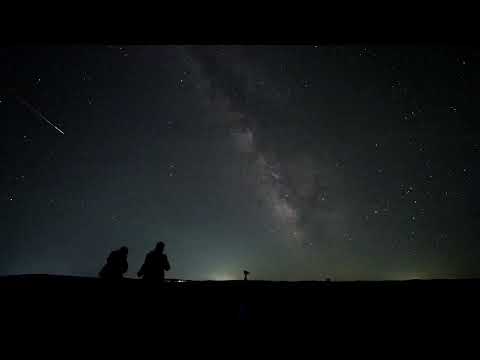
Did you see it? One of the more common questions during a meteor shower occurs because the time it takes for a meteor to flash is similar to the time it takes for a head to turn. Possibly, though, the glory of seeing bright meteors shoot across the sky -- while knowing that they were once small pebbles on another world -- might make it all worthwhile, even if your observing partner(s) can't always share in your experience. The featured video is composed of short clips taken in Inner Mongolia, China during the 2023 Perseid Meteor Shower. Several bright meteors were captured while live-reaction audio was being recorded -- just as the meteors flashed. This year's 2024 Perseids also produced many beautiful meteors. Another good meteor shower to watch for is the Geminids which peak yearly in mid-December, this year with relatively little competing glow from a nearly new Moon. Your Sky Surprise: What picture did APOD feature on your birthday? (post 1995)
NASA · public domain
2023
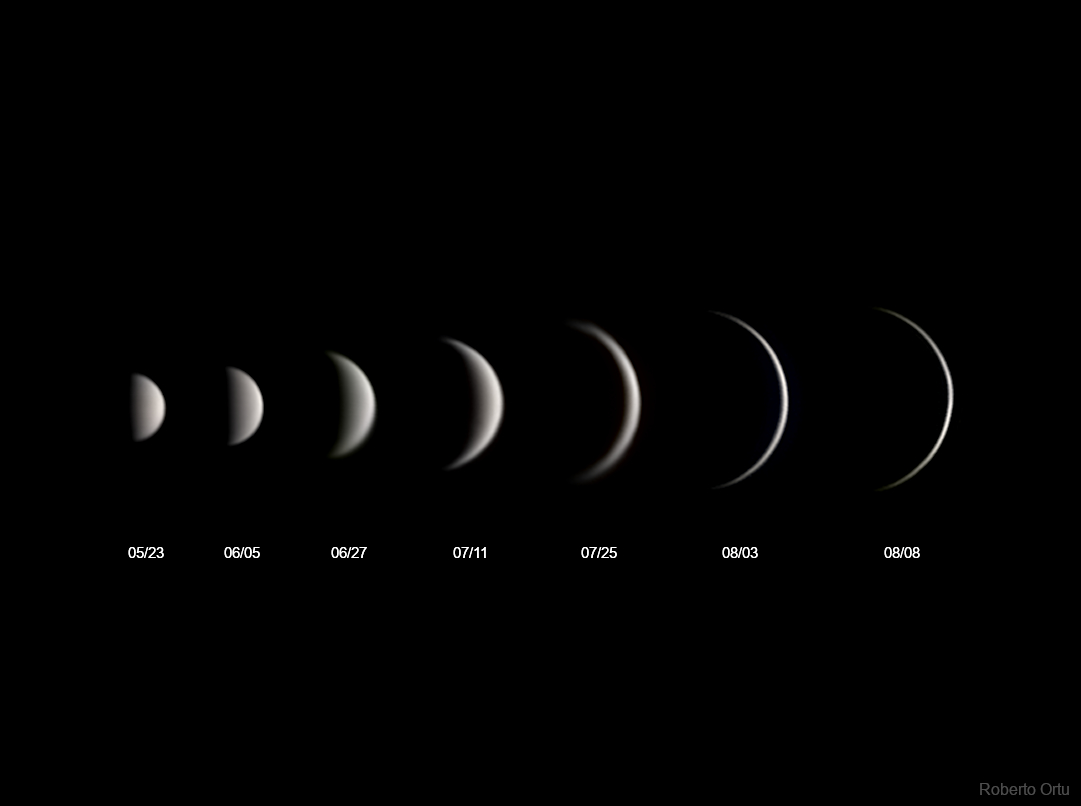
Just as the Moon goes through phases, Venus' visible sunlit hemisphere waxes and wanes. This sequence of telescopic images illustrates the steady changes for Venus during its recent 2023 apparition as our evening star. Gliding along its interior orbit between Earth and Sun, Venus grows larger during that period because it is approaching planet Earth. Its crescent narrows though, as the inner planet swings closer to our line-of-sight to the Sun. Closest to the Earth-Sun line but passing about 8 degrees south of the Sun, on August 13 Venus reached its (non-judgmental) inferior conjunction. And now Venus shines above the eastern horizon in predawn skies, completing its transition to planet Earth's morning star. On August 21, NASA's Parker Solar Probe completed its sixth gravity assist flyby of Venus, using the encounter to maneuver the probe toward its closest approach yet to the Sun.
© Roberto Ortu — used with the credit NASA publishes
2022
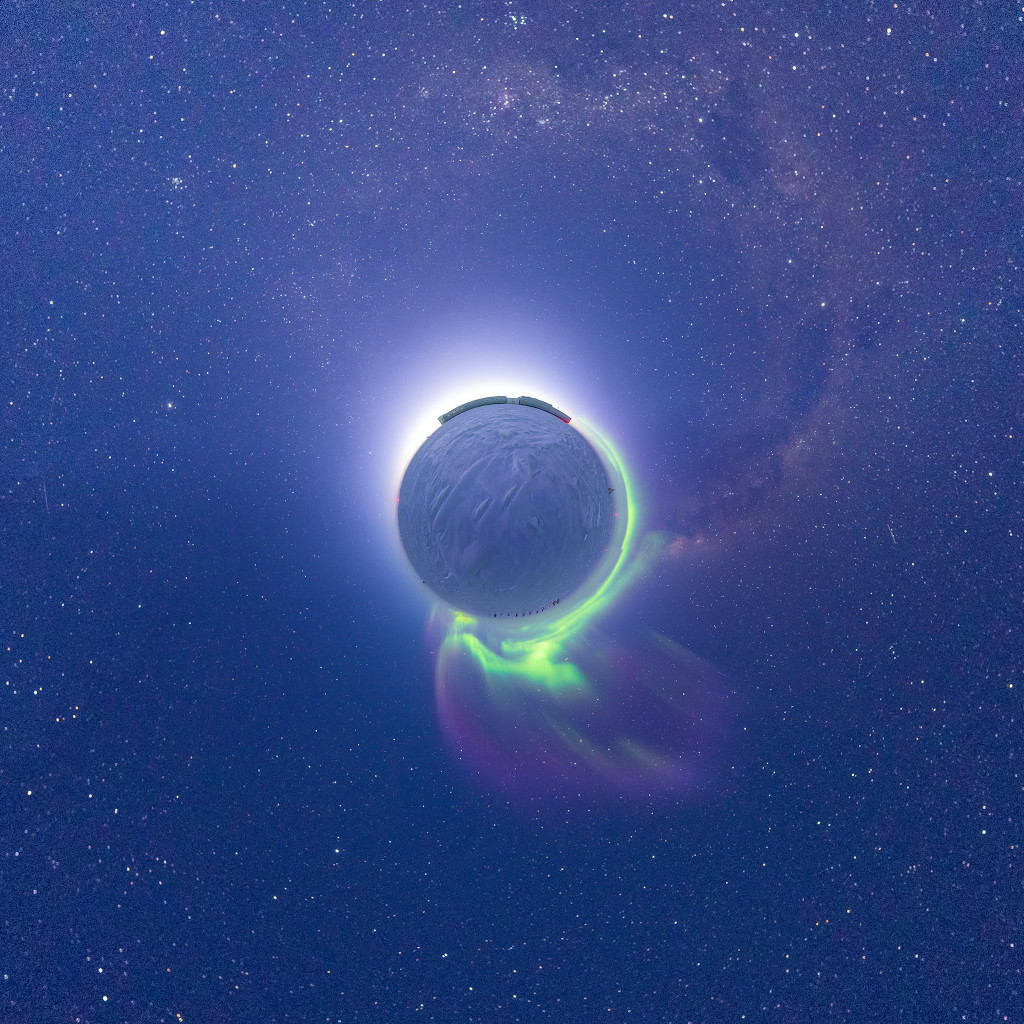
Lights play around the horizon of this snowy little planet as it drifts through a starry night sky. Of course the little planet is actually planet Earth. Recorded on August 21, the digitally warped, nadir centered panorama covers nearly 360x180 degrees outside the Amundsen-Scott South Pole Station, Antarctica. The southernmost research outpost is near the horizon at the top where the light of dawn is approaching after nearly six months of darkness. Along the bottom is the ceremonial pole marker surrounded by the 12 flags of the original signatories of the Antarctic treaty, with a wild display of the aurora australis above.
© Aman Chokshi — used with the credit NASA publishes
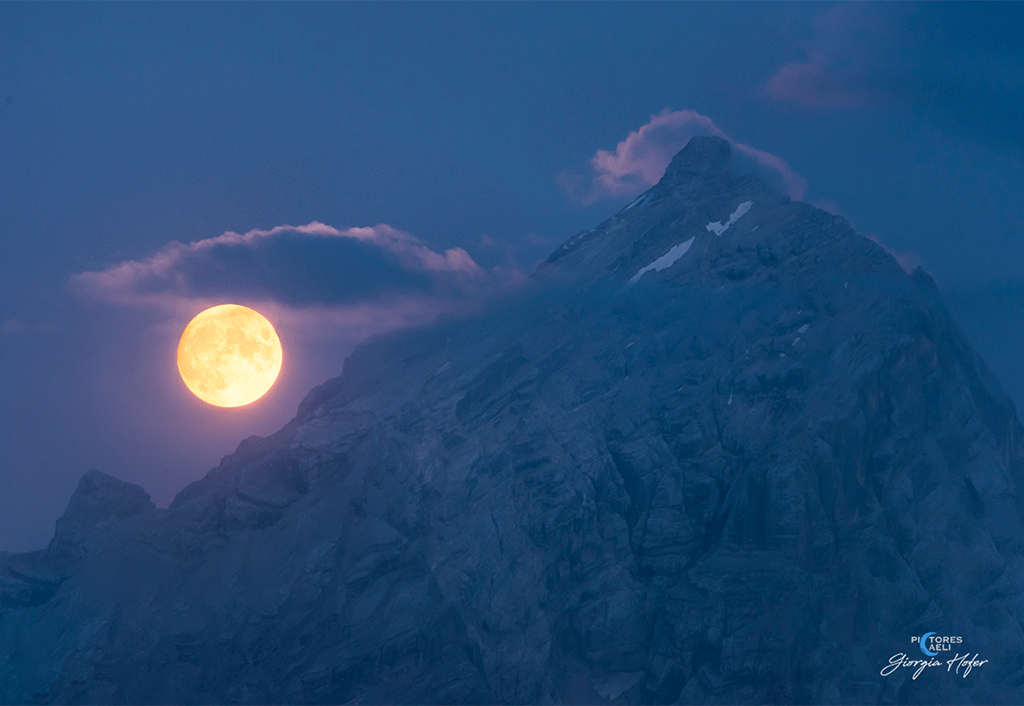
2021
Nature photographers and other fans of planet Earth always look forward to the blue hour. That's the transition in twilight, just before sunrise or after sunset, when the Sun is below the horizon but land and sky are still suffused with a beautiful blue light. After sunset on August 21, this blue hour snapshot captured the nearly full Moon as it rose opposite the Sun, above the rugged Italian Alps from Cortina d'Ampezzo, Italy. Sharing bluish hues with the sky, the rocky pyramid of Monte Antelao, also known as the King of the Dolomites, is the region's prominent alpine peak. The moonlight is yellow, but even so this full Moon was known to some as a seasonal Blue Moon. That's because by one definition the third full Moon of a season with four full moons in it is called a Blue Moon. Recognizing a season as the time between a solstice and an equinox, this season's fourth full Moon will be rising in the blue hour of September 20, just before September's equinox.
© Giorgia Hofer — used with the credit NASA publishes

1998
The first flight of the Boeing Delta III ends in disaster 75 seconds after liftoff, resulting in the loss of the Galaxy X communications satellite.
Delta III ↗Event text and thumbnails come from Wikipedia and are used under CC BY-SA 4.0. Images are drawn only from Wikimedia Commons, which does not accept non-free content — each thumbnail links to its file page, where its licence and author are recorded.
Launch records are from The Space Devs’ Launch Library 2. This archive is still being mirrored, so some days are incomplete. Pictures are NASA’s Astronomy Picture of the Day; NASA imagery is generally not subject to copyright, but individual APOD entries are frequently the property of the photographer, and each caption says which applies.
General-audience astronomy and spaceflight — none of it a textbook.
As an Amazon Associate I earn from qualifying purchases. Links here cost you nothing extra.
LISTING
Still the best single argument for why any of this matters, and it leaves the arithmetic in. For a reader who wants the science, not just the awe.
LISTING
The case for leaving Earth, written by someone unsentimental about how hard that is. Suits readers who want the argument rather than the poster.
LISTING
Hard-SF problem solving in The Martian's key — for anyone who liked the engineering more than the peril. The only novel on this list.
BROWSE opens an Amazon search, not a specific recommendation.
LINKS AMAZON.COM