Launches
ON RECORD9MISSIONS
9 of them reached orbit. The earliest was 1967, the most recent 2026.
ARCHIVE // DAY OF YEAR
9 orbital launches flew on March 8, the earliest of them in 1967, and 9 reached orbit. Wikipedia records 4 spaceflight and astronomy events on March 8. Below are the pictures NASA published on March 8 in 3 different years — each one taken or released on this exact date.
9MISSIONS
9 of them reached orbit. The earliest was 1967, the most recent 2026.
4ENTRIES
Spaceflight and astronomy entries from Wikipedia's record of this date, oldest first — from 1978 onward.
3IMAGES
NASA's Astronomy Picture of the Day for March 8, one per year. Some are public domain and some belong to the photographer — each says which.
NASA’s Astronomy Picture of the Day, for this calendar date in each of the last several years.
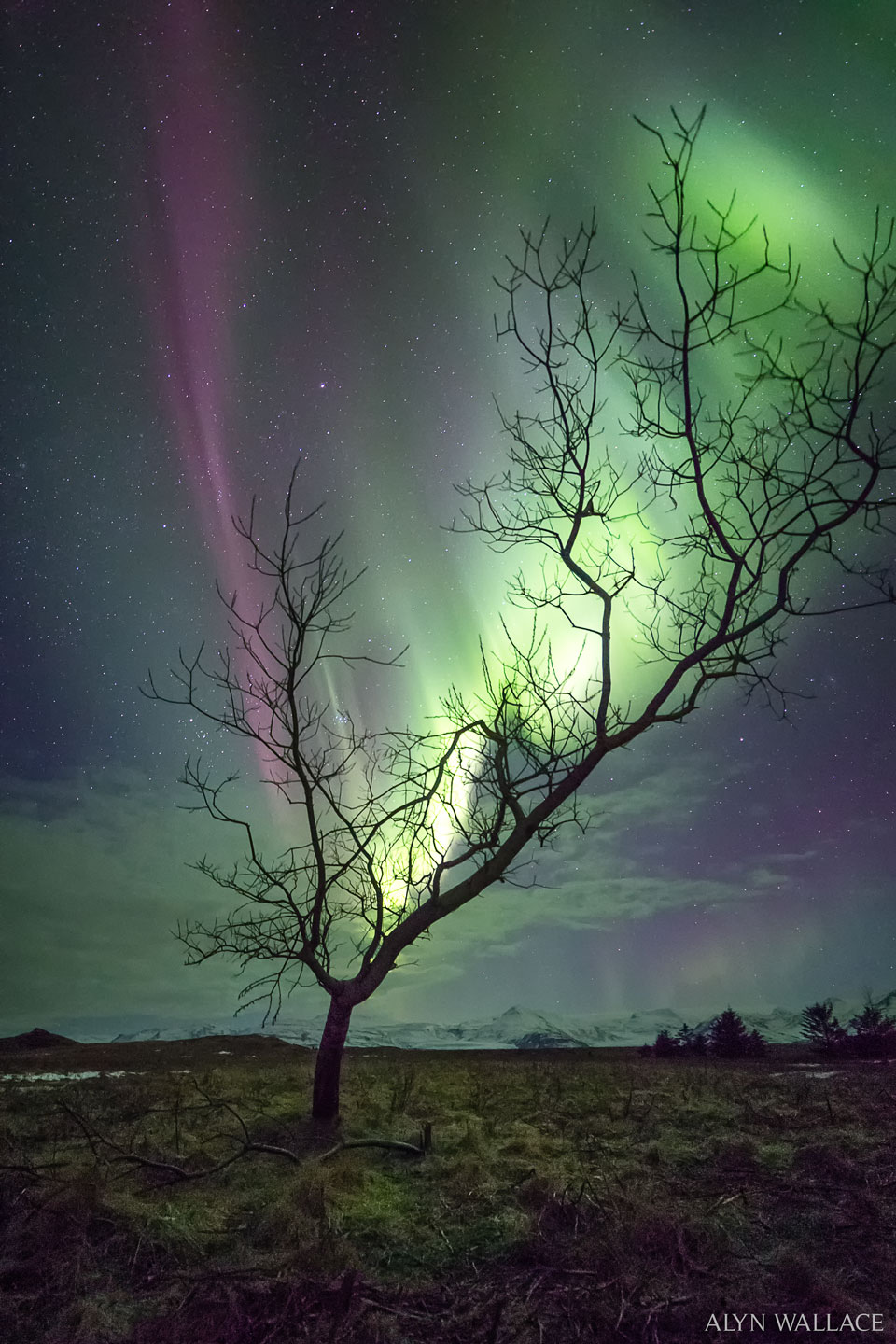
2026
Yes, but can your tree do this? Pictured is a visual coincidence between the dark branches of a nearby tree and bright glow of a distant aurora. The beauty of the aurora -- combined with how it seemed to mimic a tree right nearby -- mesmerized the photographer to such a degree that he momentarily forgot to take pictures. When viewed at the right angle, it seemed that this tree had aurora for leaves. Fortunately, before the aurora morphed into a different overall shape, he came to his senses and captured the awe-inspiring momentary coincidence. Typically triggered by solar explosions, aurora are caused by high energy electrons impacting the Earth's atmosphere around 150 kilometers up. The unusual Earth-sky collaboration was witnessed in March of 2017 in Iceland. Sky Surprise: What picture did APOD feature on your birthday? (after 1995)
© Alyn Wallace — used with the credit NASA publishes
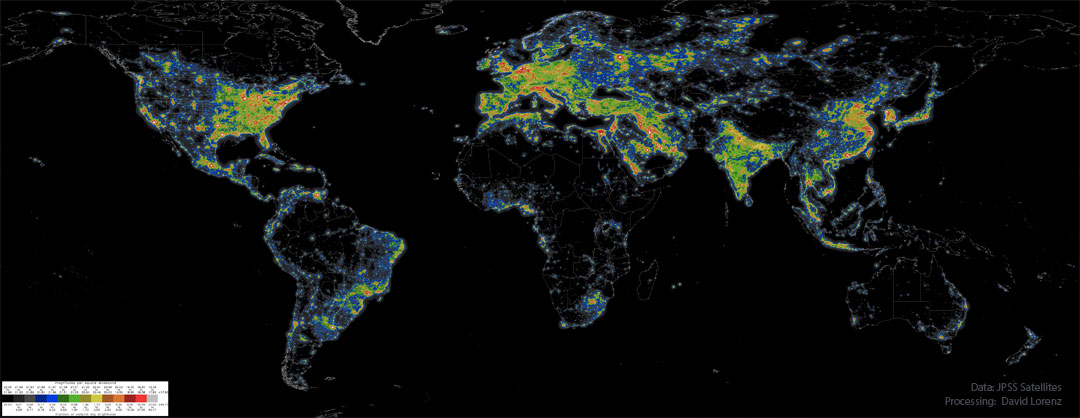
2023
Where have all the dim stars gone? From many places on the Earth including major cities, the night sky has been reduced from a fascinating display of thousands of stars to a diffuse glow through which only a few stars are visible. The featured map indicates the relative amount of light pollution that occurs across the Earth. The cause of the pollution is artificial light reflecting off molecules and aerosols in the atmosphere. Parts of the Eastern United States and Western Europe colored red, for example, have an artificial night sky glow over ten times that of the natural sky. In any area marked orange or red, the central band of our Milky Way Galaxy is no longer visible. The International Dark Sky Association suggests common types of fixtures that provide relatively little amounts of light pollution. Light Up Your Internal Night Sky: Random APOD Generator
NASA · public domain
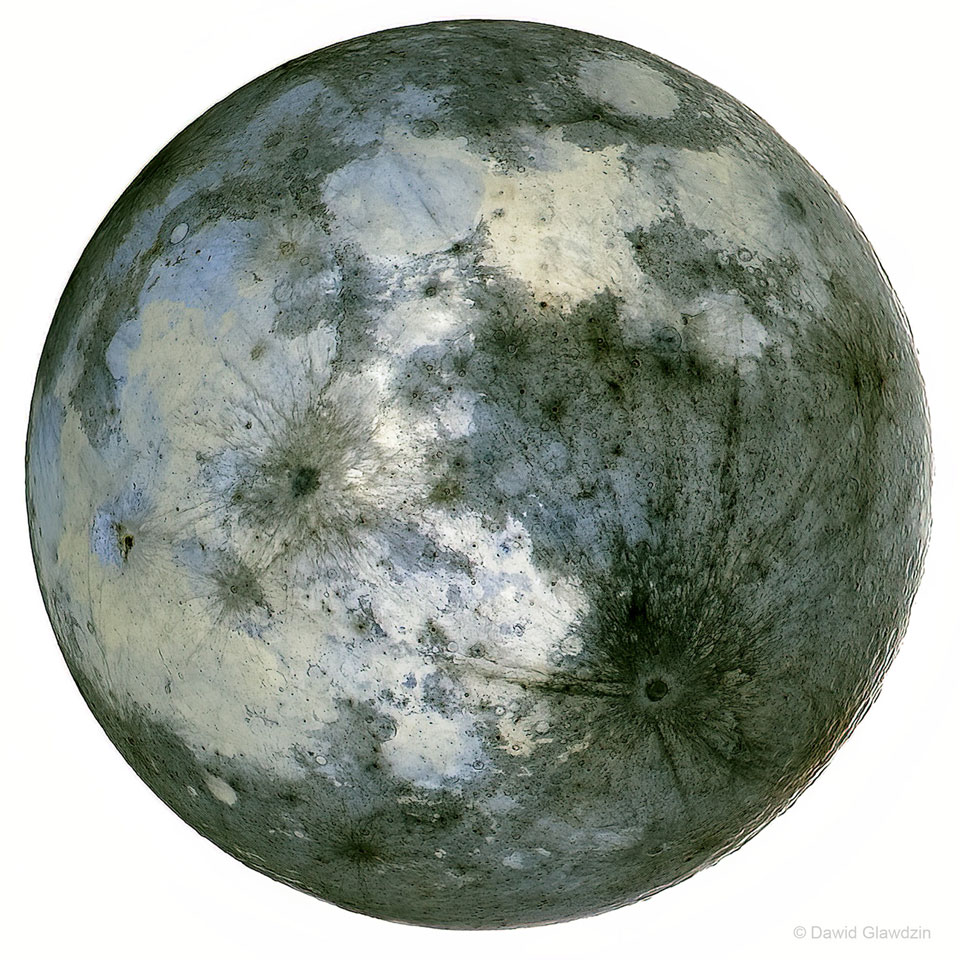
2022
Which moon is this? It's Earth's moon -- but in inverted colors. Here, the pixel values corresponding to light and dark areas have been translated in reverse, or inverted, producing a false-color representation reminiscent of a black and white photographic negative. However, this is an inverted color image -- where the muted colors of the moon are real but digitally exaggerated before inversion. Normally bright rays from the large crater Tycho dominate the southern (bottom) features as easily followed dark green lines emanating from the 85-kilometer diameter impact site. Normally dark lunar mare appear light and silvery. The image was acquired in Southend-on-Sea, England, UK. Historically, astronomical images recorded on photographic plates were directly examined on inverted-color negatives because it helped the eye pick out faint details.
© Dawid Glawdzin — used with the credit NASA publishes
1978
BBC Radio 4 began broadcasting Douglas Adams's The Hitchhiker's Guide to the Galaxy, a science fiction radio series that was later adapted into novels, a television series, and other formats.
BBC Radio 4 ↗1979
Images taken by Voyager 1 proved the existence of volcanoes on Io (pictured), a moon of Jupiter.
Voyager 1 ↗2001
Space Shuttle Discovery launches on STS-102, carrying the Expedition 2 crew to the International Space Station.
Space Shuttle Discovery ↗General-audience astronomy and spaceflight — none of it a textbook.
As an Amazon Associate I earn from qualifying purchases. Links here cost you nothing extra.
LISTING
Still the best single argument for why any of this matters, and it leaves the arithmetic in. For a reader who wants the science, not just the awe.
LISTING
The case for leaving Earth, written by someone unsentimental about how hard that is. Suits readers who want the argument rather than the poster.
LISTING
Hard-SF problem solving in The Martian's key — for anyone who liked the engineering more than the peril. The only novel on this list.
BROWSE opens an Amazon search, not a specific recommendation.
LINKS AMAZON.COM
Event text and thumbnails come from Wikipedia and are used under CC BY-SA 4.0. Images are drawn only from Wikimedia Commons, which does not accept non-free content — each thumbnail links to its file page, where its licence and author are recorded.
Launch records are from The Space Devs’ Launch Library 2. Pictures are NASA’s Astronomy Picture of the Day; NASA imagery is generally not subject to copyright, but individual APOD entries are frequently the property of the photographer, and each caption says which applies.