Launches
ON RECORD14MISSIONS
14 of them reached orbit. The earliest was 1960, the most recent 2026.
ARCHIVE // DAY OF YEAR
14 orbital launches flew on April 1, the earliest of them in 1960, and 14 reached orbit. Wikipedia records 4 spaceflight and astronomy events on April 1. Below are the pictures NASA published on April 1 in 5 different years — each one taken or released on this exact date.
14MISSIONS
14 of them reached orbit. The earliest was 1960, the most recent 2026.
4ENTRIES
Spaceflight and astronomy entries from Wikipedia's record of this date, oldest first — from 1234 onward.
5IMAGES
NASA's Astronomy Picture of the Day for April 1, one per year. Some are public domain and some belong to the photographer — each says which.
NASA’s Astronomy Picture of the Day, for this calendar date in each of the last several years.
2026
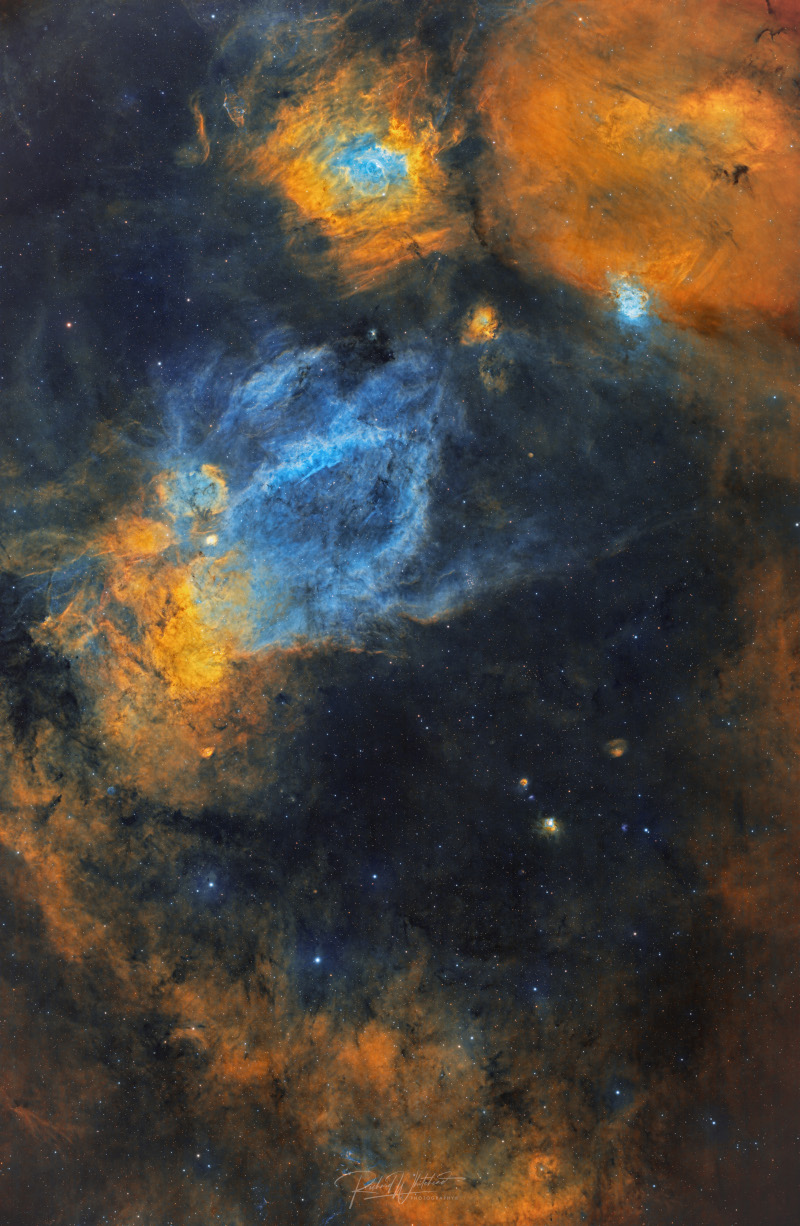
What unexpected things do you see when you look up at the night sky? Today’s image resembles an abstract painting, with large swaths of color strewn across a cosmic canvas seemingly without design. Despite the image's abstract nature, the human mind finds patterns, identifying a large claw reaching up towards a floating bubble. Embedded within these seemingly random structures are the physical laws that govern how light and matter interact. The Claw (Sh2-157) and Bubble (NGC 7635) Nebulae glow colors that are mapped to the yellow and blue shown, indicating the presence of hydrogen and oxygen ionized by the intense light emitted from stars several times the mass of the Sun. This image depicts both the chaos and structure of astronomical processes, showing that a common thread between art and science is to look for the unexpected.
© Richard Whitehead Text: Keighley Rockcliffe (NASA GSFC, UMBC CSST, CRESST II) — used with the credit NASA publishes
2025
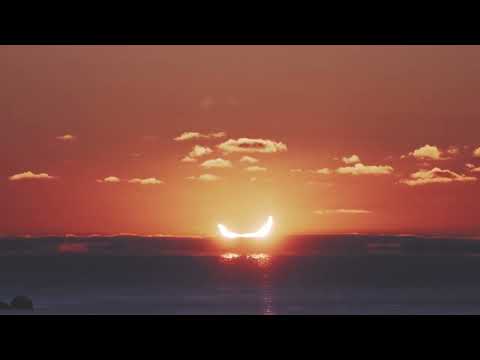
Can the Sun appear to rise twice at the same time? This was just the case a few days ago from Les Escoumins, Quebec, Canada as our Solar System's bright central orb rose just as it was being partially eclipsed by the Moon. The featured video shows this unusual double-sunrise in real time and being reflected by the St. Lawrence River. Soon after the initial two spots of light appear over distant clouds, what appears to be bright horns become visible -- which are really just parts of the Sun not being eclipsed. Soon, the entire eclipsed Sun is visible above the horizon. In all, this broken sunrise took less than two minutes during a partial eclipse that lasted many times longer. Although the Moon circles the Earth once a month (moon-th), it does not always eclipse the Sun because its tilted orbit usually takes it above or below. Gallery: Partial Solar Eclipse of 2025 March
© Jason Kurth; Music: House of the Rising Sun (Sebastian McQueen via SoundCloud) — used with the credit NASA publishes
2024
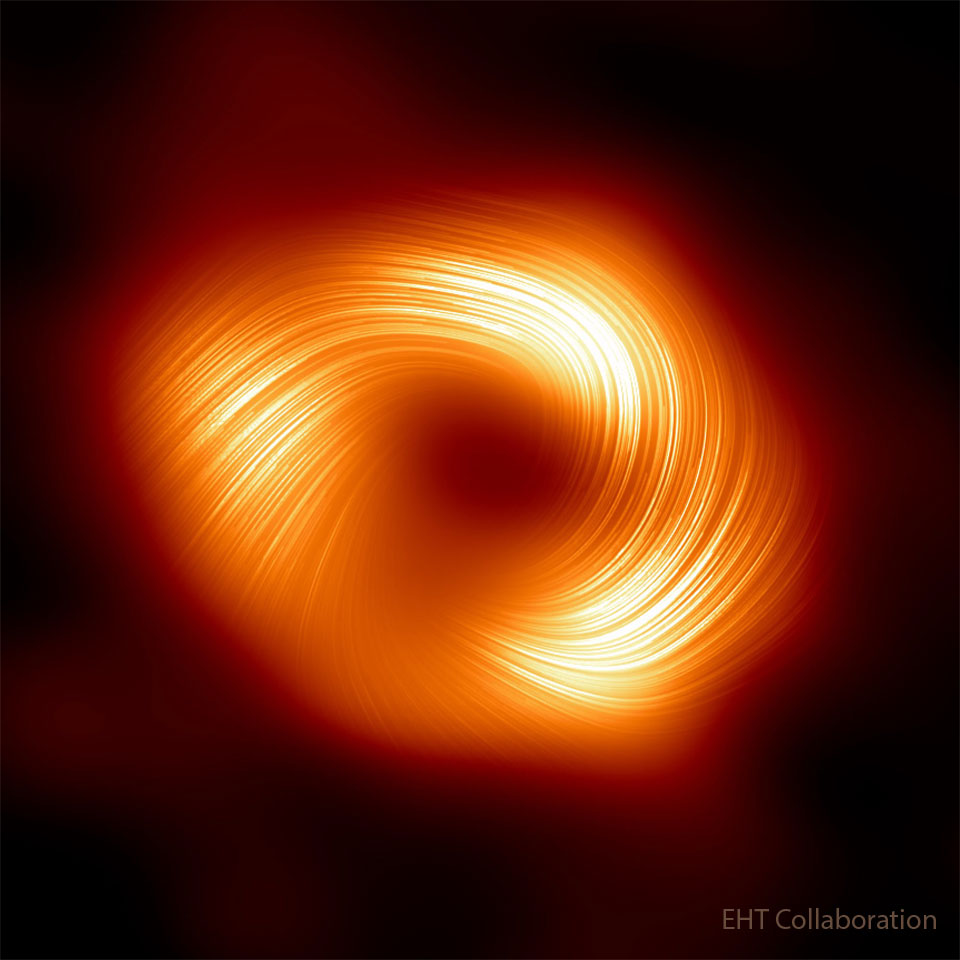
What's happening to the big black hole in the center of our galaxy? It is sucking in matter from a swirling disk -- a disk that is magnetized, it has now been confirmed. Specifically, the black hole's accretion disk has recently been seen to emit polarized light, radiation frequently associated with a magnetized source. Pictured here is a close-up of Sgr A*, our Galaxy's central black hole, taken by radio telescopes around the world participating in the Event Horizon Telescope (EHT) Collaboration. Superposed are illustrative curved lines indicating polarized light likely emitted from swirling magnetized gas that will soon fall into the 4+ million solar mass central black hole. The central part of this image is likely dark because little light-emitting gas is visible between us and the dark event horizon of the black hole. Continued EHT monitoring of this and M87's central black hole may yield new clues about the gravity of black holes and how infalling matter creates disks and jets. NASA Predicts: Moon to Get in Way of Sun
NASA · public domain
2023
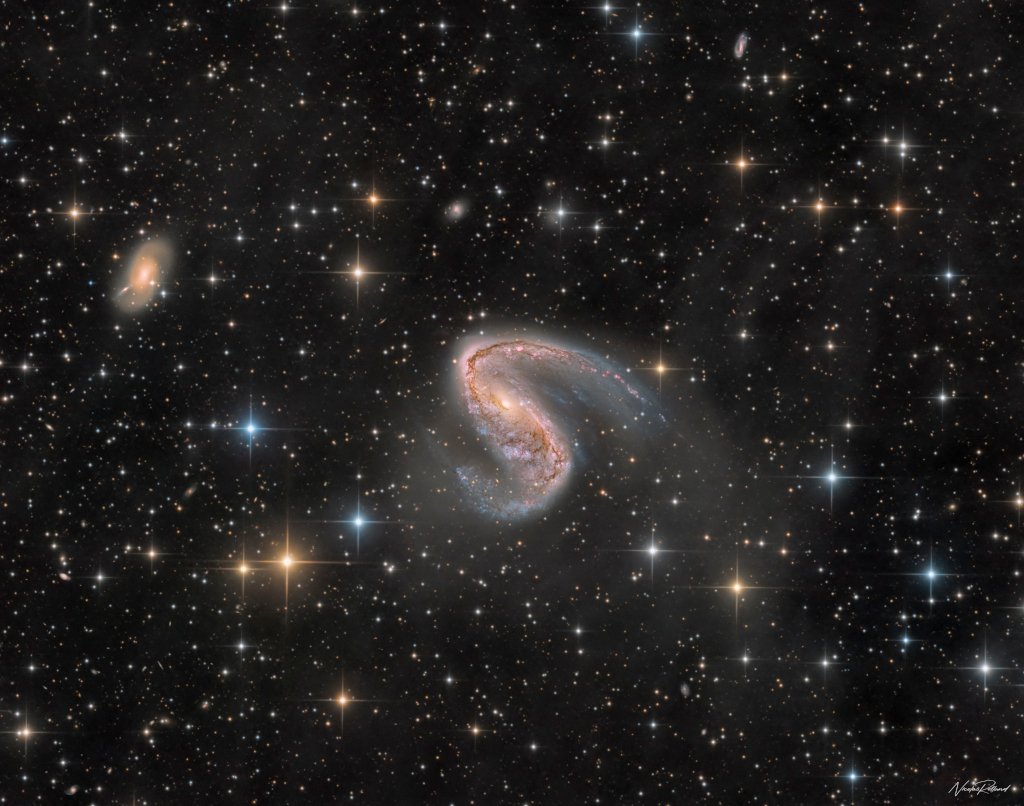
Distorted galaxy NGC 2442 can be found in the southern constellation of the flying fish, (Piscis) Volans. Located about 50 million light-years away, the galaxy's two spiral arms extending from a pronounced central bar give it a hook-shaped appearance in this deep colorful image, with spiky foreground stars scattered across the telescopic field of view. The image also reveals the distant galaxy's obscuring dust lanes, young blue star clusters and reddish star forming regions surrounding a core of yellowish light from an older population of stars. But the star forming regions seem more concentrated along the drawn-out (upper right) spiral arm. The distorted structure is likely the result of an ancient close encounter with the smaller galaxy seen near the top left of the frame. The two interacting galaxies are separated by about 150,000 light-years at the estimated distance of NGC 2442.
© Nicolas Rolland — used with the credit NASA publishes
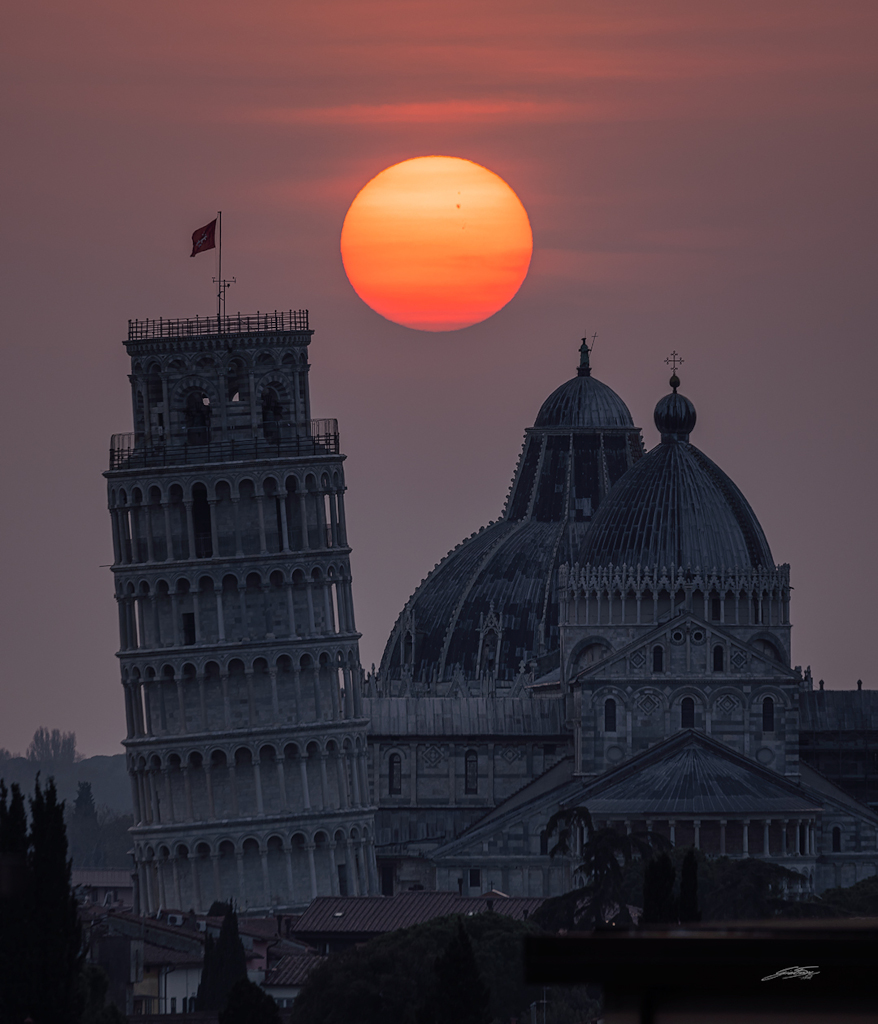
2022
The natural filter of a hazy atmosphere offered this recognizable architecture and sunset telephoto view on March 27. Dark against the solar disk, large sunspots in solar active regions 2975 and 2976 are wedged between the Duomo of Pisa and its famous Leaning Tower. Only one day later, Sun-staring spacecraft watched active region 2975 unleash a frenzy of solar flares along with two coronal mass ejections. The largest impacted the magnetosphere on March 31 triggering a geomagnetic storm and aurorae in high-latitude night skies. On March 30, active region 2975 erupted again with a powerful X-class solar flare that caused a temporary radio blackout on planet Earth.
© Antonio Tartarini — used with the credit NASA publishes
1234
Richard Marshal, Earl of Pembroke, was defeated by knights loyal to King Henry III of England at the Battle of the Curragh in County Kildare, Ireland.
Richard Marshal, 3rd Earl of Pembroke ↗1960
The TIROS-1 satellite transmits the first television picture from space.
Television Infrared Observation Satellite ↗2026
The Artemis II lunar flyby mission launches, marking the first crewed flight above low Earth orbit since Apollo 17 in 1972.
Artemis II ↗General-audience astronomy and spaceflight — none of it a textbook.
As an Amazon Associate I earn from qualifying purchases. Links here cost you nothing extra.
LISTING
Still the best single argument for why any of this matters, and it leaves the arithmetic in. For a reader who wants the science, not just the awe.
LISTING
The case for leaving Earth, written by someone unsentimental about how hard that is. Suits readers who want the argument rather than the poster.
LISTING
Hard-SF problem solving in The Martian's key — for anyone who liked the engineering more than the peril. The only novel on this list.
BROWSE opens an Amazon search, not a specific recommendation.
LINKS AMAZON.COM
Event text and thumbnails come from Wikipedia and are used under CC BY-SA 4.0. Images are drawn only from Wikimedia Commons, which does not accept non-free content — each thumbnail links to its file page, where its licence and author are recorded.
Launch records are from The Space Devs’ Launch Library 2. Pictures are NASA’s Astronomy Picture of the Day; NASA imagery is generally not subject to copyright, but individual APOD entries are frequently the property of the photographer, and each caption says which applies.