Launches
ON RECORD25MISSIONS
22 of them reached orbit. The earliest was 1958, the most recent 2026.
ARCHIVE // DAY OF YEAR
25 orbital launches flew on February 5, the earliest of them in 1958, and 22 reached orbit. Below are the pictures NASA published on February 5 in 6 different years — each one taken or released on this exact date.
25MISSIONS
22 of them reached orbit. The earliest was 1958, the most recent 2026.
0ENTRIES
Wikipedia records no spaceflight or astronomy event on this date.
6IMAGES
NASA's Astronomy Picture of the Day for February 5, one per year. Some are public domain and some belong to the photographer — each says which.
NASA’s Astronomy Picture of the Day, for this calendar date in each of the last several years.
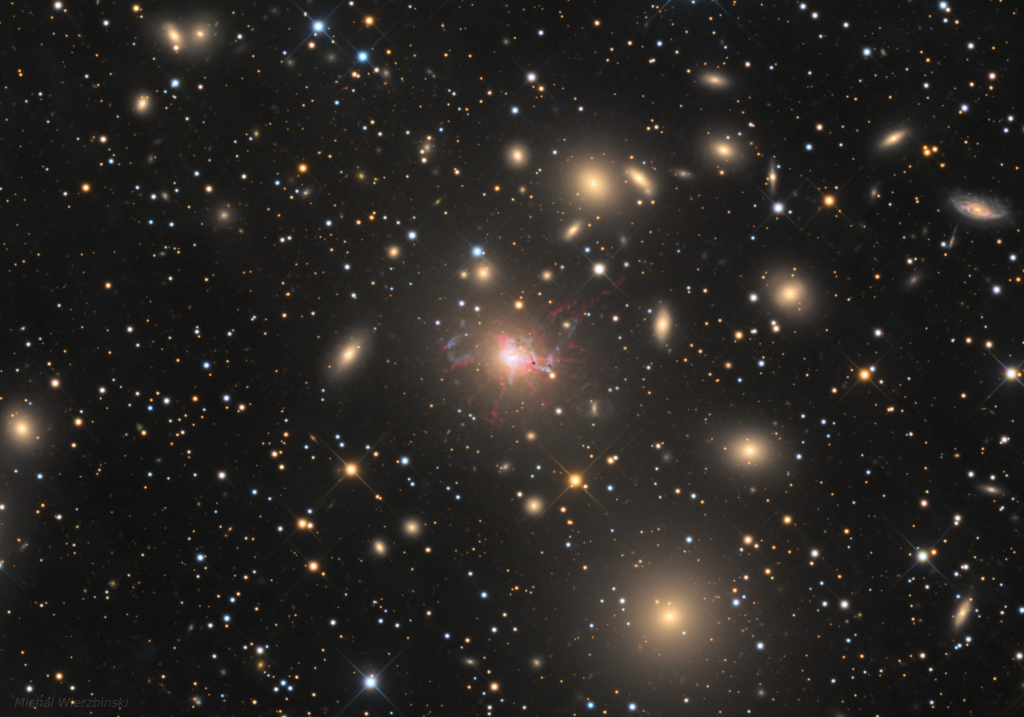
2026
Active galaxy NGC 1275 is the central, dominant member of the large and relatively nearby Perseus Cluster of Galaxies. Wild-looking at visible wavelengths, the active galaxy is also a prodigious source of x-rays and radio emission. NGC 1275 accretes matter as entire galaxies fall into it, ultimately feeding a supermassive black hole at the galaxy's core. Narrowband image data used in this sharp telescopic image highlights the resulting galactic debris and filaments of glowing gas, some up to 20,000 light-years long. The filaments persist in NGC 1275, even though the turmoil of galactic collisions should destroy them. What keeps the filaments together? Observations indicate that the structures, pushed out from the galaxy's center by the black hole's activity, are held together by magnetic fields. Also known as Perseus A, NGC 1275 itself spans over 100,000 light years and lies about 230 million light years away.
© Michal Wierzbinski — used with the credit NASA publishes
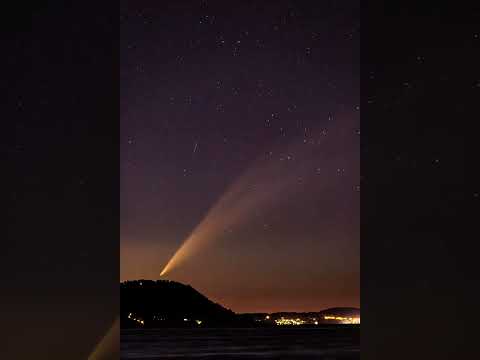
2025
Where is Comet ATLAS going? In the featured time-lapse video, the comet is not itself moving very much, but the Earth's rotation makes it appear to be setting over a hill. The Comet C/2024 G3 (ATLAS) sequence was captured with an ordinary camera on January 22 from the Araucanía Region in central Chile. Comet ATLAS has been an impressive site in the evening skies of Earth's Southern Hemisphere over the past few weeks, so bright and awe-inspiring that it may eventually become known as the Great Comet of 2025. Unfortunately, Comet G3 ATLAS is not going anywhere anymore because its central nucleus broke up during its close pass to the Sun last month. Some of the comet's scattered remains of rocks and ice will continue to orbit the Sun, some in nearly the same outward section of the orbit that the comet's nucleus would have taken.
© Gabriel Muñoz — used with the credit NASA publishes
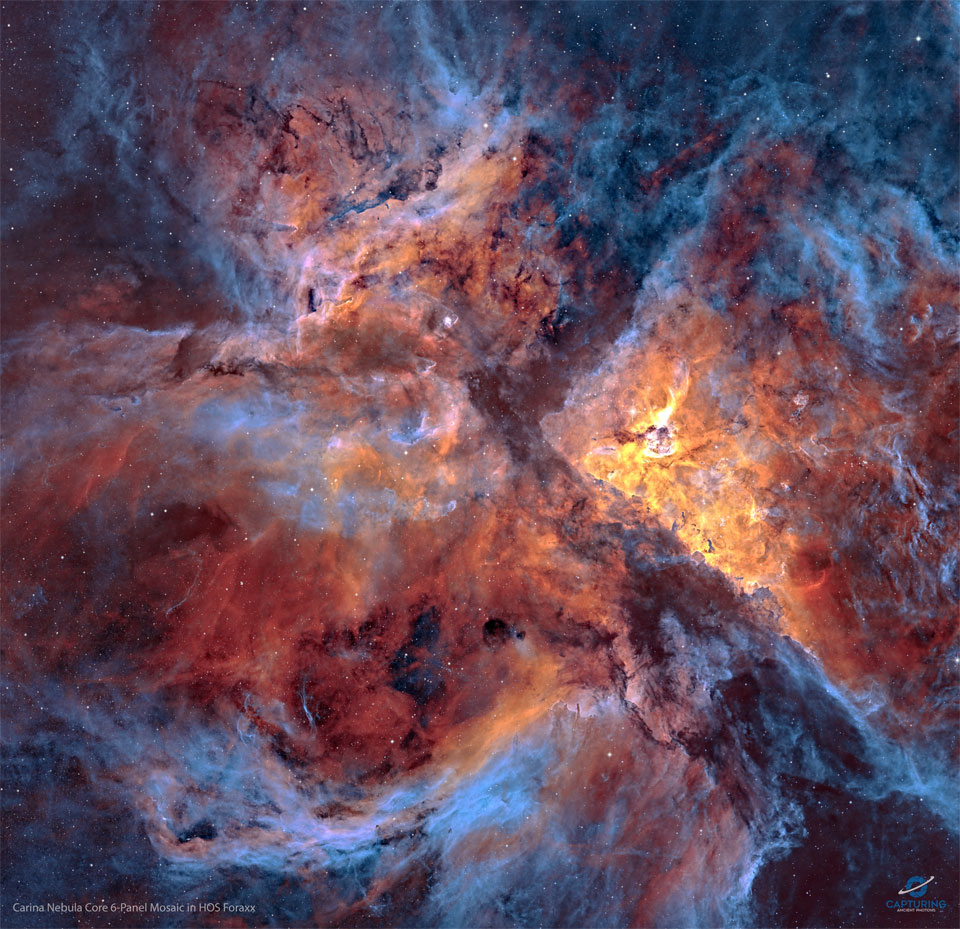
2024
What's happening in the core of the Carina Nebula? Stars are forming, dying, and leaving an impressive tapestry of dark dusty filaments. The entire Carina Nebula, cataloged as NGC 3372, spans over 300 light years and lies about 8,500 light-years away in the constellation of Carina. The nebula is composed predominantly of hydrogen gas, which emits the pervasive red and orange glows seen mostly in the center of this highly detailed featured image. The blue glow around the edges is created primarily by a trace amount of glowing oxygen. Young and massive stars located in the nebula's center expel dust when they explode in supernovas. Eta Carinae, the most energetic star in the nebula's center, was one of the brightest stars in the sky in the 1830s, but then faded dramatically. Your Sky Surprise: What picture did APOD feature on your birthday? (post 1995)
© Carlos Taylor — used with the credit NASA publishes
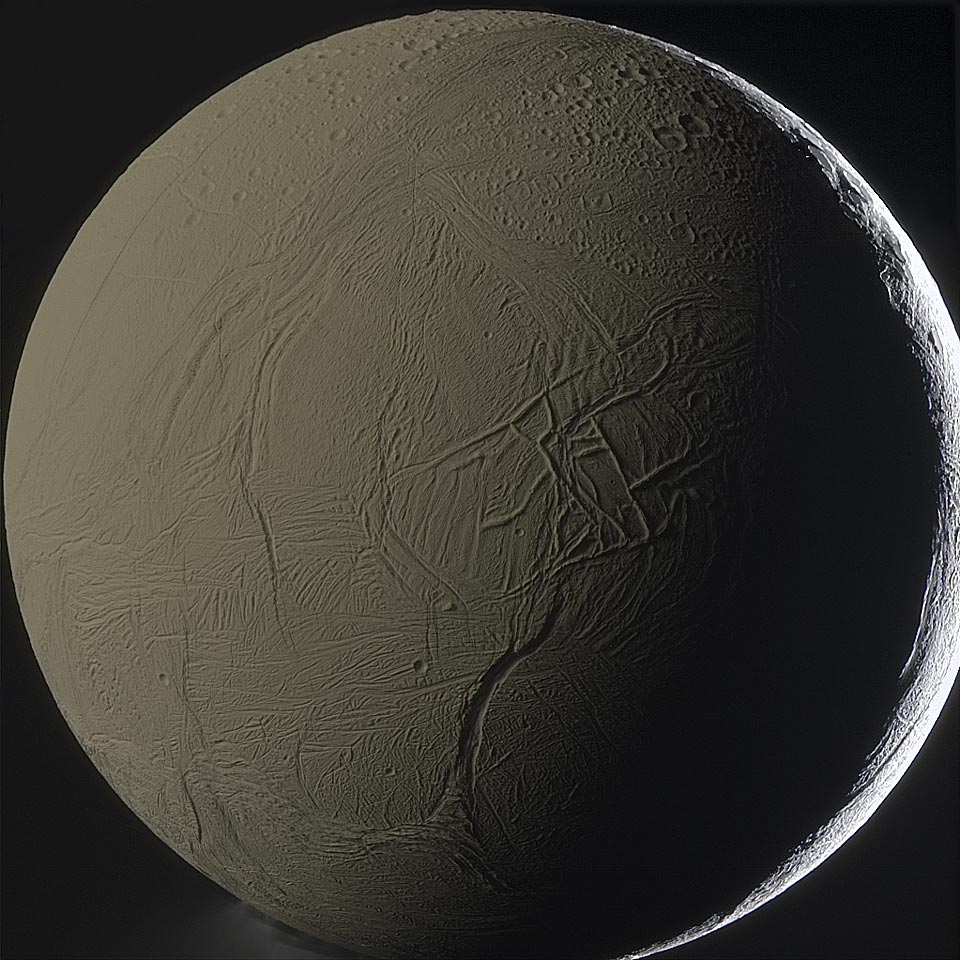
2023
This moon is shining by the light of its planet. Specifically, a large portion of Enceladus pictured here is illuminated primarily by sunlight first reflected from the planet Saturn. The result is that the normally snow-white moon appears in the gold color of Saturn's cloud tops. As most of the illumination comes from the image left, a labyrinth of ridges throws notable shadows just to the right of the image center, while the kilometer-deep canyon Labtayt Sulci is visible just below. The bright thin crescent on the far right is the only part of Enceladus directly lit by the Sun. The featured image was taken in 2011 by the robotic Cassini spacecraft during a close pass by the enigmatic moon. Inspection of the lower left part of this digitally sharpened image reveals plumes of ice crystals thought to originate in a below-surface sea.
NASA · public domain
2022
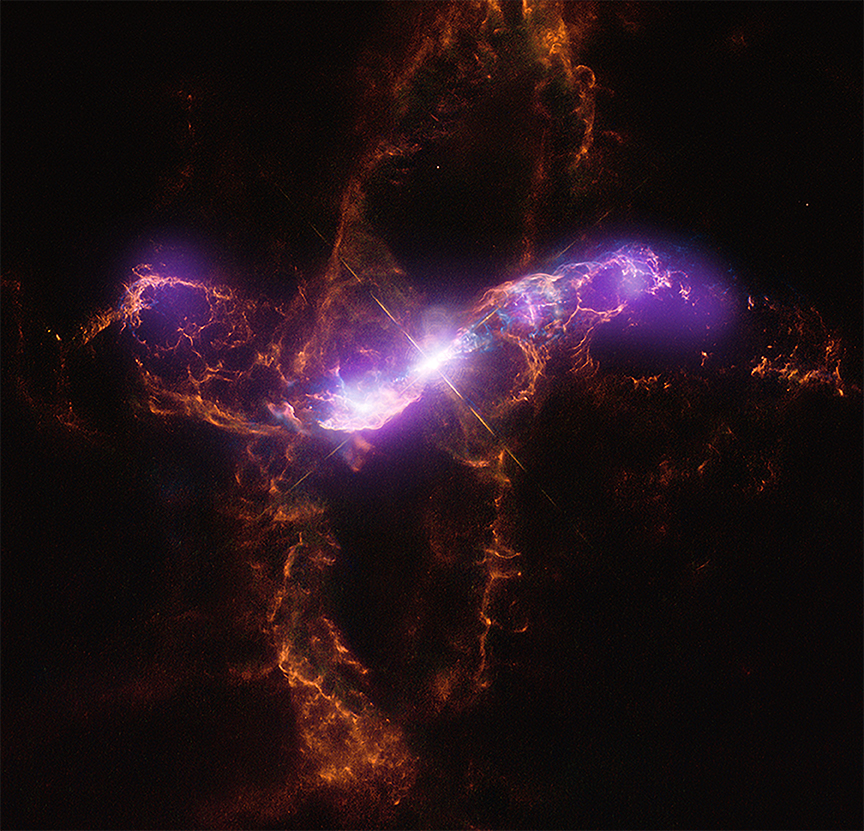
Variable star R Aquarii is actually an interacting binary star system, two stars that seem to have a close symbiotic relationship. Centered in this space-based optical/x-ray composite image it lies about 710 light years away. The intriguing system consists of a cool red giant star and hot, dense white dwarf star in mutual orbit around their common center of mass. With binoculars you can watch as R Aquarii steadily changes its brightness over the course of a year or so. The binary system's visible light is dominated by the red giant, itself a Mira-type long period variable star. But material in the cool giant star's extended envelope is pulled by gravity onto the surface of the smaller, denser white dwarf, eventually triggering a thermonuclear explosion, blasting material into space. Astronomers have seen such outbursts over recent decades. Evidence for much older outbursts is seen in these spectacular structures spanning almost a light-year as observed by the Hubble Space Telescope (in red and blue). Data from the Chandra X-ray Observatory (in purple) shows the X-ray glow from shock waves created as a jet from the white dwarf strikes surrounding material.
NASA · public domain
2021
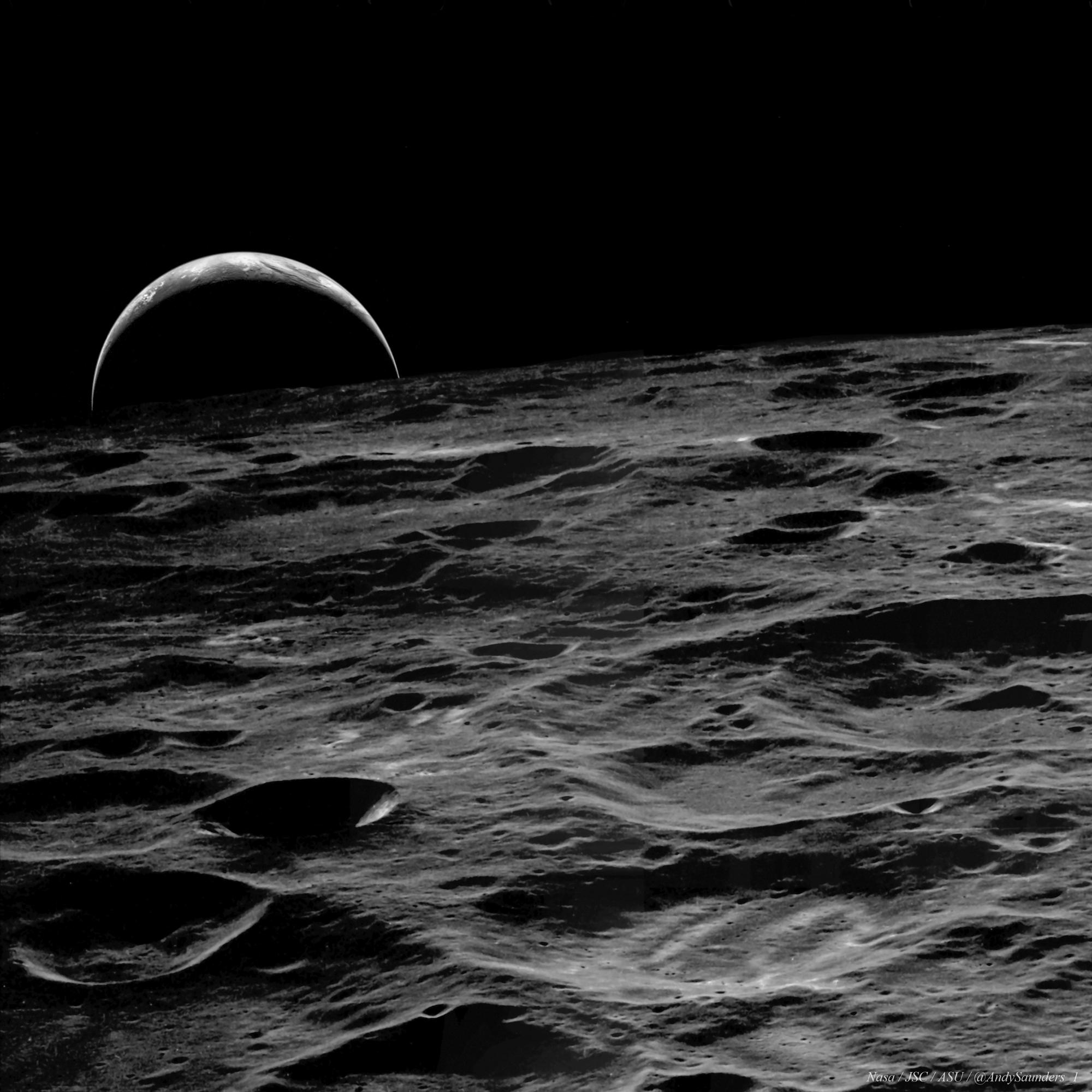
Fifty years ago this Sunday (February 7, 1971), the crew of Apollo 14 left lunar orbit and headed for home. They watched this Earthrise from their command module Kitty Hawk. With Earth's sunlit crescent just peeking over the lunar horizon, the cratered terrain in the foreground is along the lunar farside. Of course, while orbiting the Moon, the crew could watch Earth rise and set, but from the lunar surface the Earth hung stationary in the sky over their landing site at Fra Mauro Base. Rock samples returned from Fra Mauro included a 20 pound rock nicknamed Big Bertha, determined to contain a likely fragment of a meteorite from planet Earth. Kept on board the Kitty Hawk during the Apollo 14 mission was a cannister of 400-500 seeds that were later grown into Moon Trees.
NASA · public domain
General-audience astronomy and spaceflight — none of it a textbook.
As an Amazon Associate I earn from qualifying purchases. Links here cost you nothing extra.
LISTING
Still the best single argument for why any of this matters, and it leaves the arithmetic in. For a reader who wants the science, not just the awe.
LISTING
The case for leaving Earth, written by someone unsentimental about how hard that is. Suits readers who want the argument rather than the poster.
LISTING
Hard-SF problem solving in The Martian's key — for anyone who liked the engineering more than the peril. The only novel on this list.
BROWSE opens an Amazon search, not a specific recommendation.
LINKS AMAZON.COM
Event text and thumbnails come from Wikipedia and are used under CC BY-SA 4.0. Images are drawn only from Wikimedia Commons, which does not accept non-free content — each thumbnail links to its file page, where its licence and author are recorded.
Launch records are from The Space Devs’ Launch Library 2. Pictures are NASA’s Astronomy Picture of the Day; NASA imagery is generally not subject to copyright, but individual APOD entries are frequently the property of the photographer, and each caption says which applies.