Launches
ON RECORD17MISSIONS
13 of them reached orbit. The earliest was 1958, the most recent 2025.
MARKED ON THIS DATE
1958 · 68 years ago today
Explorer 1, the first American satellite
Explorer 1 reached orbit carrying a Geiger counter that found the radiation belts now named for James Van Allen.
read more2003 · 23 years ago today
Columbia
Columbia broke up over Texas during reentry, killing all seven aboard, sixteen days after a foam strike damaged its wing.
read moreARCHIVE // DAY OF YEAR
17 orbital launches flew on February 1, the earliest of them in 1958, and 13 reached orbit. Wikipedia records 3 spaceflight and astronomy events on February 1. Below are the pictures NASA published on February 1 in 6 different years — each one taken or released on this exact date.
17MISSIONS
13 of them reached orbit. The earliest was 1958, the most recent 2025.
3ENTRIES
Spaceflight and astronomy entries from Wikipedia's record of this date, oldest first — from 1942 onward.
6IMAGES
NASA's Astronomy Picture of the Day for February 1, one per year. Some are public domain and some belong to the photographer — each says which.
NASA’s Astronomy Picture of the Day, for this calendar date in each of the last several years.
2026
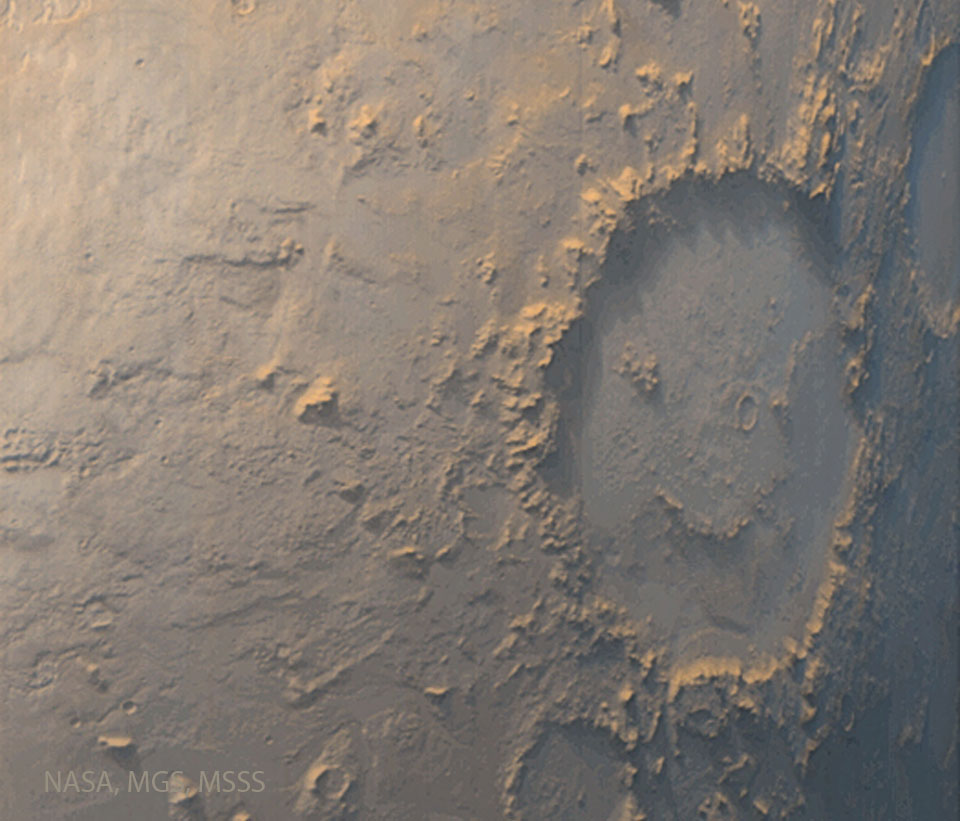
Mars has put on a happy face. The Martian crater Galle is famous because it has internal markings that make it look like a face that is both smiling and winking. These markings were originally discovered in the 1970s in pictures taken by the Viking Orbiter. The Mars Global Surveyor (MGS) spacecraft that orbited Mars from 1996 to 2006 captured the featured picture. Happy Face Crater and its iconic features were formed by chance billions of years ago when a city-sized asteroid slammed into the Martian surface. All rocky planets and moons in our Solar System show impact craters, with the highest number of craters found on Earth's Moon and the planet Mercury. Earth and Venus would show the most, though, were it not for weather and erosion. Sky Surprise: What picture did APOD feature on your birthday? (after 1995)
NASA · public domain

2025
Vivid and lustrous, wafting iridescent waves of color wash across this skyscape from northern Sweden. Known as nacreous clouds or mother-of-pearl clouds, they are rare. But their unforgettable appearance was captured in this snapshot on January 12 with the Sun just below the local horizon. A type of polar stratospheric cloud, they form when unusually cold temperatures in the usually cloudless lower stratosphere form ice crystals. Still sunlit at altitudes of around 15 to 25 kilometers, the clouds diffract the sunlight even when the Sun itself is hidden from direct view.
© Vojan Höfer — used with the credit NASA publishes
2024
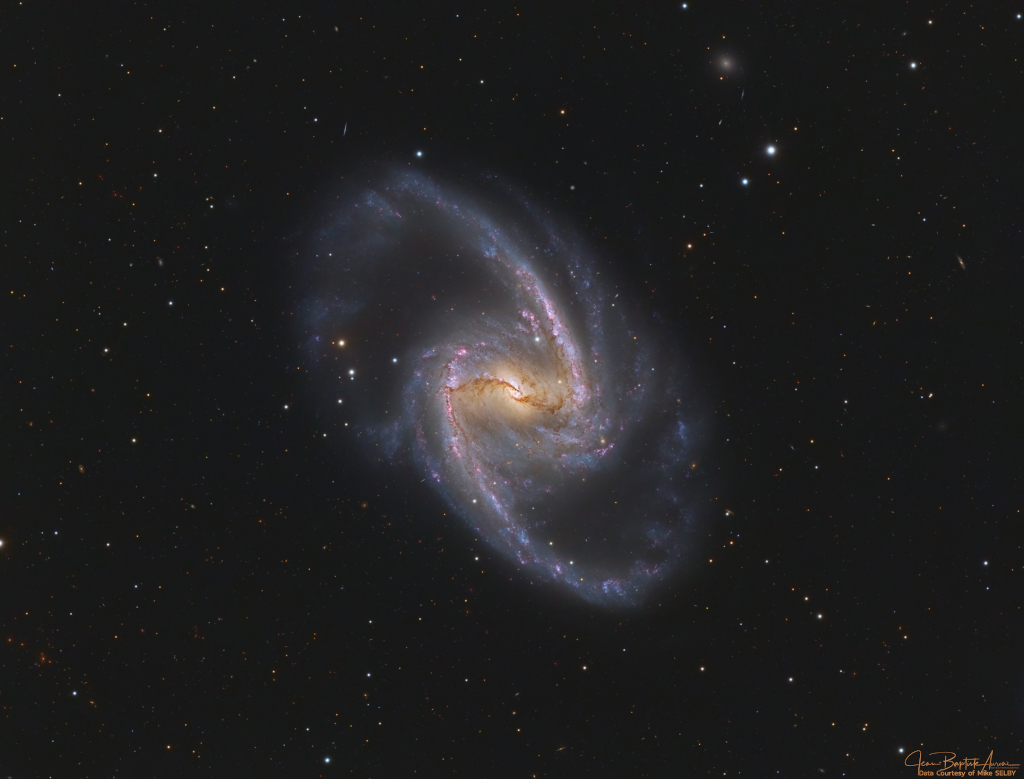
Barred spiral galaxy NGC 1365 is truly a majestic island universe some 200,000 light-years across. Located a mere 60 million light-years away toward the faint but heated constellation Fornax, NGC 1365 is a dominant member of the well-studied Fornax Cluster of galaxies. This sharp color image shows the intense, reddish star forming regions near the ends of the galaxy's central bar and along its spiral arms. Seen in fine detail, obscuring dust lanes cut across the galaxy's bright core. At the core lies a supermassive black hole. Astronomers think NGC 1365's prominent bar plays a crucial role in the galaxy's evolution, drawing gas and dust into a star-forming maelstrom and ultimately feeding material into the central black hole.
© Jean-Baptiste Auroux — used with the credit NASA publishes
2023
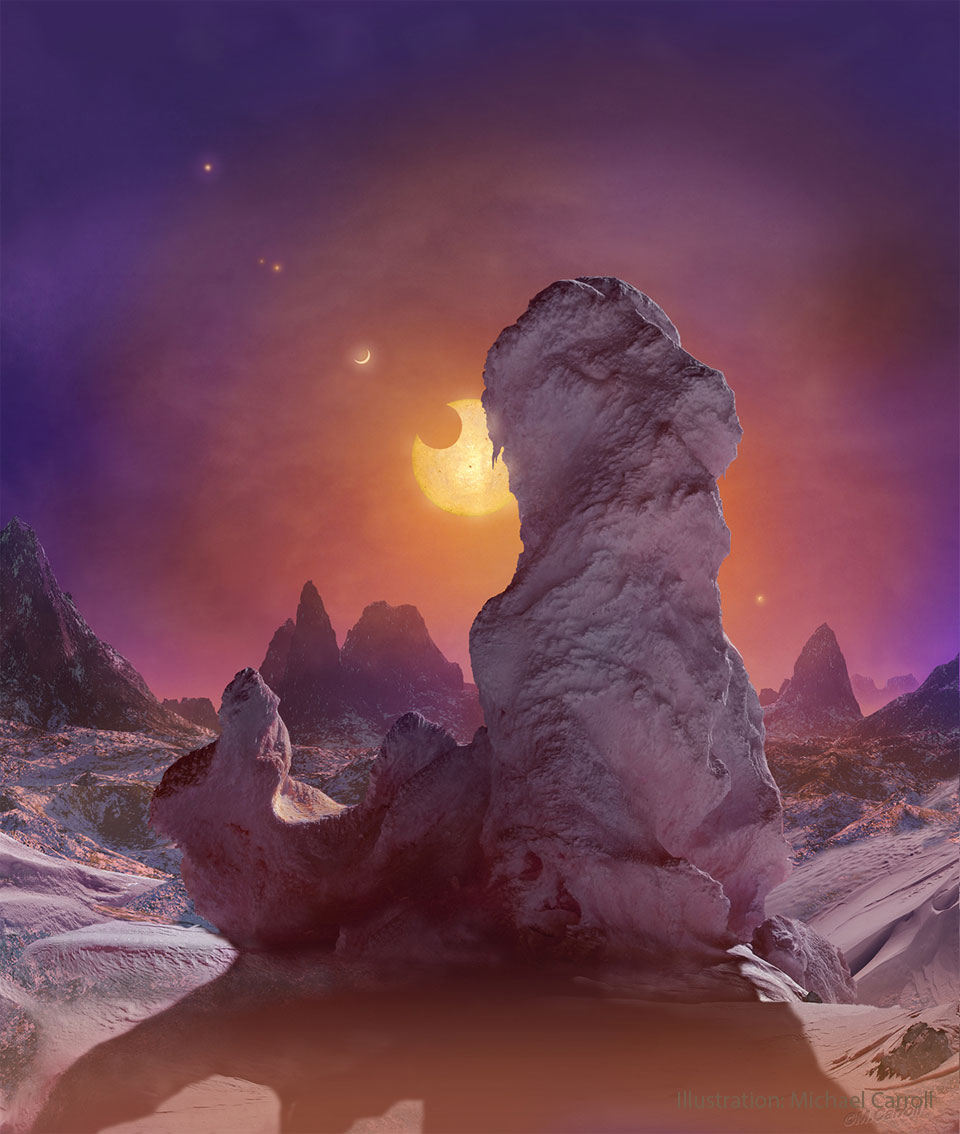
Seven worlds orbit the ultracool dwarf star TRAPPIST-1. A mere 40 light-years away, many of the exoplanets were discovered in 2016 using the Transiting Planets and Planetesimals Small Telescope (TRAPPIST) located at La Silla Observatory in Chile and later confirmed with telescope including NASA's Spitzer Space Telescope. The TRAPPIST-1 planets are likely all rocky and similar in size to Earth, and so compose one of the largest treasure troves of terrestrial planets ever detected around a single star. Because they orbit very close to their faint, tiny star they could also have regions where surface temperatures allow for the presence of ice or even liquid water, a key ingredient for life. Their tantalizing proximity to Earth makes them prime candidates for future telescopic explorations of the atmospheres of potentially habitable planets. All seven exoplanets appear in the featured illustration, which imagines a view from the most distant known world of this system, TRAPPIST-1h, as having a rocky landscape covered in ice. Meanwhile, in the imagined background, one of the system's inner planets crosses in front of the dim, orange, nearly Jupiter-sized parent star. Astrophysicists: Browse 3,000+ codes in the Astrophysics Source Code Library
© Michael Carroll — used with the credit NASA publishes
2022
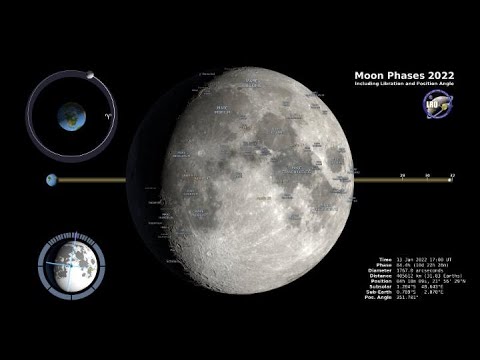
What will the Moon phase be on your birthday this year? It is hard to predict because the Moon's appearance changes nightly. As the Moon orbits the Earth, the half illuminated by the Sun first becomes increasingly visible, then decreasingly visible. The featured video animates images and altitude data taken by NASA's Moon-orbiting Lunar Reconnaissance Orbiter to show all 12 lunations that appear this year, 2022 -- as seen from Earth's northern (southern) hemisphere. A single lunation describes one full cycle of our Moon, including all of its phases. A full lunation takes about 29.5 days, just under a month (moon-th). As each lunation progresses, sunlight reflects from the Moon at different angles, and so illuminates different features differently. During all of this, of course, the Moon always keeps the same face toward the Earth. What is less apparent night-to-night is that the Moon's apparent size changes slightly, and that a slight wobble called a libration occurs as the Moon progresses along its elliptical orbit.
NASA · public domain

2021
Have you ever seen a halo around the Moon? This fairly common sight occurs when high thin clouds containing millions of tiny ice crystals cover much of the sky. Each ice crystal acts like a miniature lens. Because most of the crystals have a similar elongated hexagonal shape, light entering one crystal face and exiting through the opposing face refracts 22 degrees, which corresponds to the radius of the Moon Halo. A similar Sun Halo may be visible during the day. Exactly how ice-crystals form in clouds remains a topic of research. In the featured image taken last week from Östersund, Sweden, a complete lunar halo was captured over snowy trees and rabbit tracks. APOD is available via Instagram: in English, Indonesian, Persian, and Portuguese
© Göran Strand — used with the credit NASA publishes
1942
World War II: U.S. Navy conducts Marshalls–Gilberts raids, the first offensive action by the United States against Japanese forces in the Pacific Theater.
Marshalls–Gilberts raids ↗2003
All seven crew members aboard Space Shuttle Columbia were killed when the orbiter disintegrated over Texas during reentry.
Space Shuttle Columbia ↗2003
Space Shuttle Columbia disintegrated during the reentry of mission STS-107 into the Earth's atmosphere, killing all seven astronauts aboard.
Space Shuttle Columbia ↗General-audience astronomy and spaceflight — none of it a textbook.
As an Amazon Associate I earn from qualifying purchases. Links here cost you nothing extra.
LISTING
Still the best single argument for why any of this matters, and it leaves the arithmetic in. For a reader who wants the science, not just the awe.
LISTING
The case for leaving Earth, written by someone unsentimental about how hard that is. Suits readers who want the argument rather than the poster.
LISTING
Hard-SF problem solving in The Martian's key — for anyone who liked the engineering more than the peril. The only novel on this list.
BROWSE opens an Amazon search, not a specific recommendation.
LINKS AMAZON.COM
Event text and thumbnails come from Wikipedia and are used under CC BY-SA 4.0. Images are drawn only from Wikimedia Commons, which does not accept non-free content — each thumbnail links to its file page, where its licence and author are recorded.
Launch records are from The Space Devs’ Launch Library 2. Pictures are NASA’s Astronomy Picture of the Day; NASA imagery is generally not subject to copyright, but individual APOD entries are frequently the property of the photographer, and each caption says which applies.