Launches
ON RECORD14MISSIONS
13 of them reached orbit. The earliest was 1966, the most recent 2026.
MARKED ON THIS DATE
1986 · 40 years ago today
Challenger
Challenger broke apart seventy-three seconds after liftoff, killing all seven aboard, including the teacher Christa McAuliffe.
read moreARCHIVE // DAY OF YEAR
14 orbital launches flew on January 28, the earliest of them in 1966, and 13 reached orbit. Wikipedia records 2 spaceflight and astronomy events on January 28. Below are the pictures NASA published on January 28 in 4 different years — each one taken or released on this exact date.
14MISSIONS
13 of them reached orbit. The earliest was 1966, the most recent 2026.
2ENTRIES
Spaceflight and astronomy entries from Wikipedia's record of this date, oldest first — from 1986 onward.
4IMAGES
NASA's Astronomy Picture of the Day for January 28, one per year. Some are public domain and some belong to the photographer — each says which.
NASA’s Astronomy Picture of the Day, for this calendar date in each of the last several years.
2026
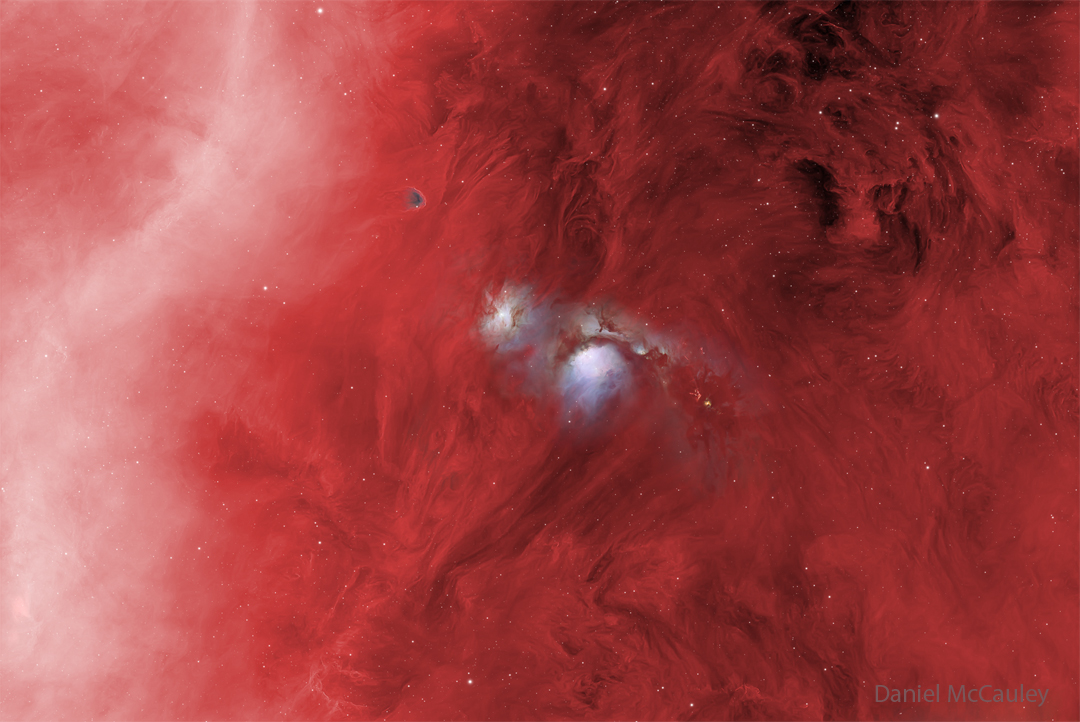
In the vast Orion Molecular Cloud complex, several bright blue nebulas are particularly apparent. Pictured here in the center are two of the most prominent reflection nebulas - dust clouds lit by the reflecting light of bright embedded stars. The more famous nebula is M78, in the image center, cataloged over 200 years ago. To its upper left is the lesser known NGC 2071. Astronomers continue to study these reflection nebulas to better understand how interior stars form. The overall red glow is from diffuse hydrogen gas that covers much of the Orion complex that spans much of the constellation of Orion. Nearby in the greater complex, which lies about 1,500 light years away, are the Orion Nebula, the Horsehead Nebula, and Barnard's Loop -- partially seen here as the white band on the upper left. Almost Hyperspace: Random APOD Generator
© Daniel McCauley — used with the credit NASA publishes

2025
Comets can be huge. When far from the Sun, a comet's size usually refers to its hard nucleus of ice and rock, which typically spans a few kilometers -- smaller than even a small moon. When nearing the Sun, however, this nucleus can eject dust and gas and leave a thin tail that can spread to an enormous length -- even greater than the distance between the Earth and the Sun. Pictured, C/2024 G3 (ATLAS) sports a tail of sunlight-reflecting dust and glowing gas that spans several times the apparent size of a full moon, appearing even larger on long duration camera images than to the unaided eye. The featured image shows impressive Comet ATLAS over trees and a grass field in Sierras de Mahoma, San Jose, Uruguay about a week ago. After being prominent in the sunset skies of Earth's southern hemisphere, Comet G3 ATLAS is now fading as it moves away from the Sun, making its impressive tails increasingly hard to see. Gallery: Comet ATLAS (G3)
© Mauricio Salazar — used with the credit NASA publishes
2024
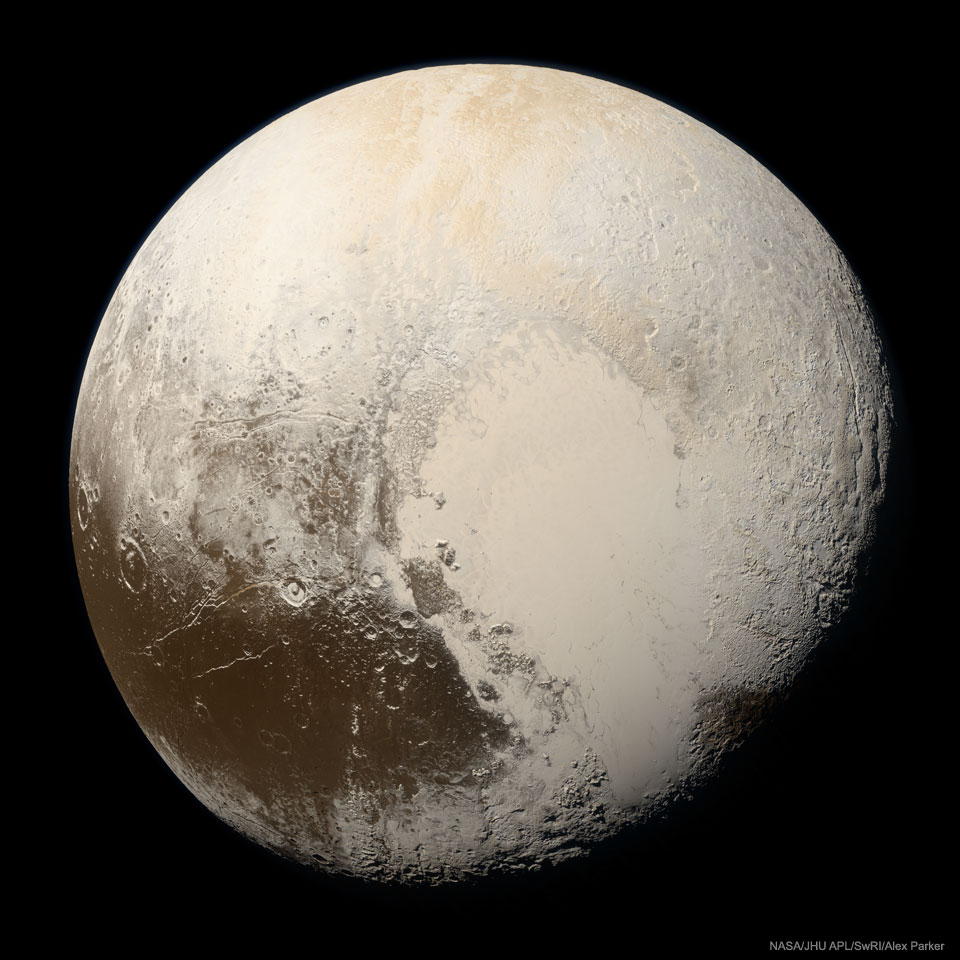
What color is Pluto, really? It took some effort to figure out. Even given all of the images sent back to Earth when the robotic New Horizons spacecraft sped past Pluto in 2015, processing these multi-spectral frames to approximate what the human eye would see was challenging. The result featured here, released three years after the raw data was acquired by New Horizons, is the highest resolution true color image of Pluto ever taken. Visible in the image is the light-colored, heart-shaped, Tombaugh Regio, with the unexpectedly smooth Sputnik Planitia, made of frozen nitrogen, filling its western lobe. New Horizons found the dwarf planet to have a surprisingly complex surface composed of many regions having perceptibly different hues. In total, though, Pluto is mostly brown, with much of its muted color originating from small amounts of surface methane energized by ultraviolet light from the Sun.
NASA · public domain
2023
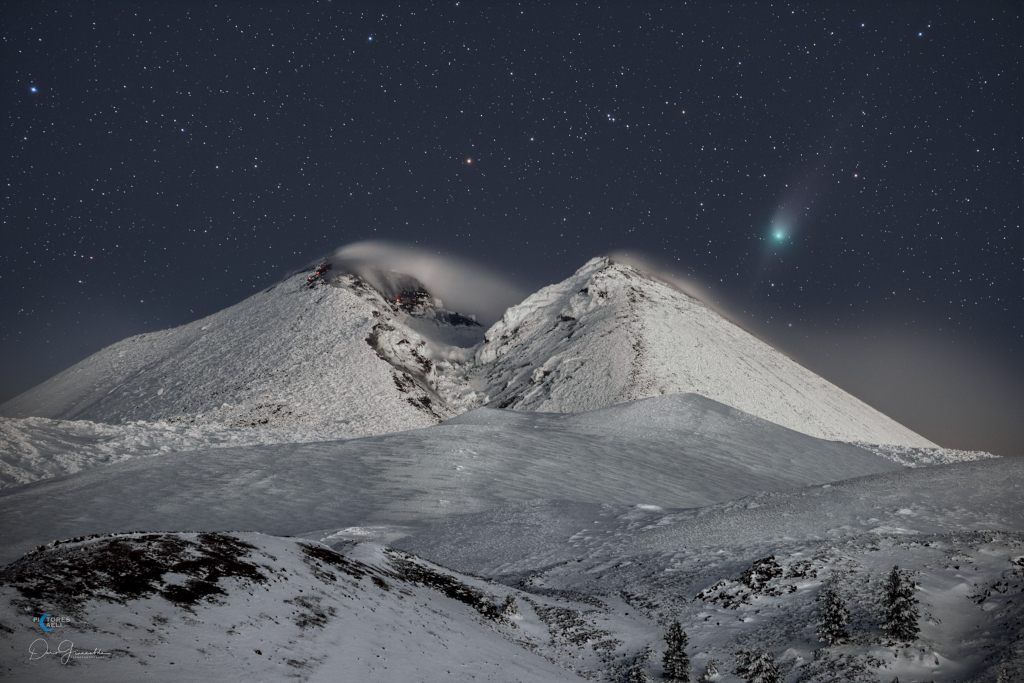
Comet-like plumes are blowing over the volcanic peaks of Mount Etna in this wintry mountain-and-skyscape from planet Earth. The stacked and blended combination of individual exposures recorded during the cold night of January 23, also capture naked-eye Comet ZTF just above Etna's snowy slopes. Of course the effect of increasing sunlight on the comet's nucleus and the solar wind are responsible for the comet's greenish coma and broad dusty tail. This weekend Comet ZTF is dashing across northern skies between north star Polaris and the Big Dipper. From a dark site you can only just spot it as a fuzzy patch though. That's still an impressive achievement if you consider you are gazing at a visitor from the distant Oort cloud with your own eyes. But binoculars or a small telescope will make for an even more enjoyable view of this Comet ZTF in the coming days. Comet ZTF Gallery: Notable Submissions to APOD
© Dario Giannobile — used with the credit NASA publishes
1986
The Space Shuttle Challenger disintegrated 73 seconds into its tenth mission (video featured), killing all seven crew members.
Space Shuttle Challenger disaster ↗1986
Space Shuttle program: STS-51-L mission: Space Shuttle Challenger disintegrates after liftoff, killing all seven astronauts on board.
Space Shuttle program ↗General-audience astronomy and spaceflight — none of it a textbook.
As an Amazon Associate I earn from qualifying purchases. Links here cost you nothing extra.
LISTING
Still the best single argument for why any of this matters, and it leaves the arithmetic in. For a reader who wants the science, not just the awe.
LISTING
The case for leaving Earth, written by someone unsentimental about how hard that is. Suits readers who want the argument rather than the poster.
LISTING
Hard-SF problem solving in The Martian's key — for anyone who liked the engineering more than the peril. The only novel on this list.
BROWSE opens an Amazon search, not a specific recommendation.
LINKS AMAZON.COM
Event text and thumbnails come from Wikipedia and are used under CC BY-SA 4.0. Images are drawn only from Wikimedia Commons, which does not accept non-free content — each thumbnail links to its file page, where its licence and author are recorded.
Launch records are from The Space Devs’ Launch Library 2. Pictures are NASA’s Astronomy Picture of the Day; NASA imagery is generally not subject to copyright, but individual APOD entries are frequently the property of the photographer, and each caption says which applies.