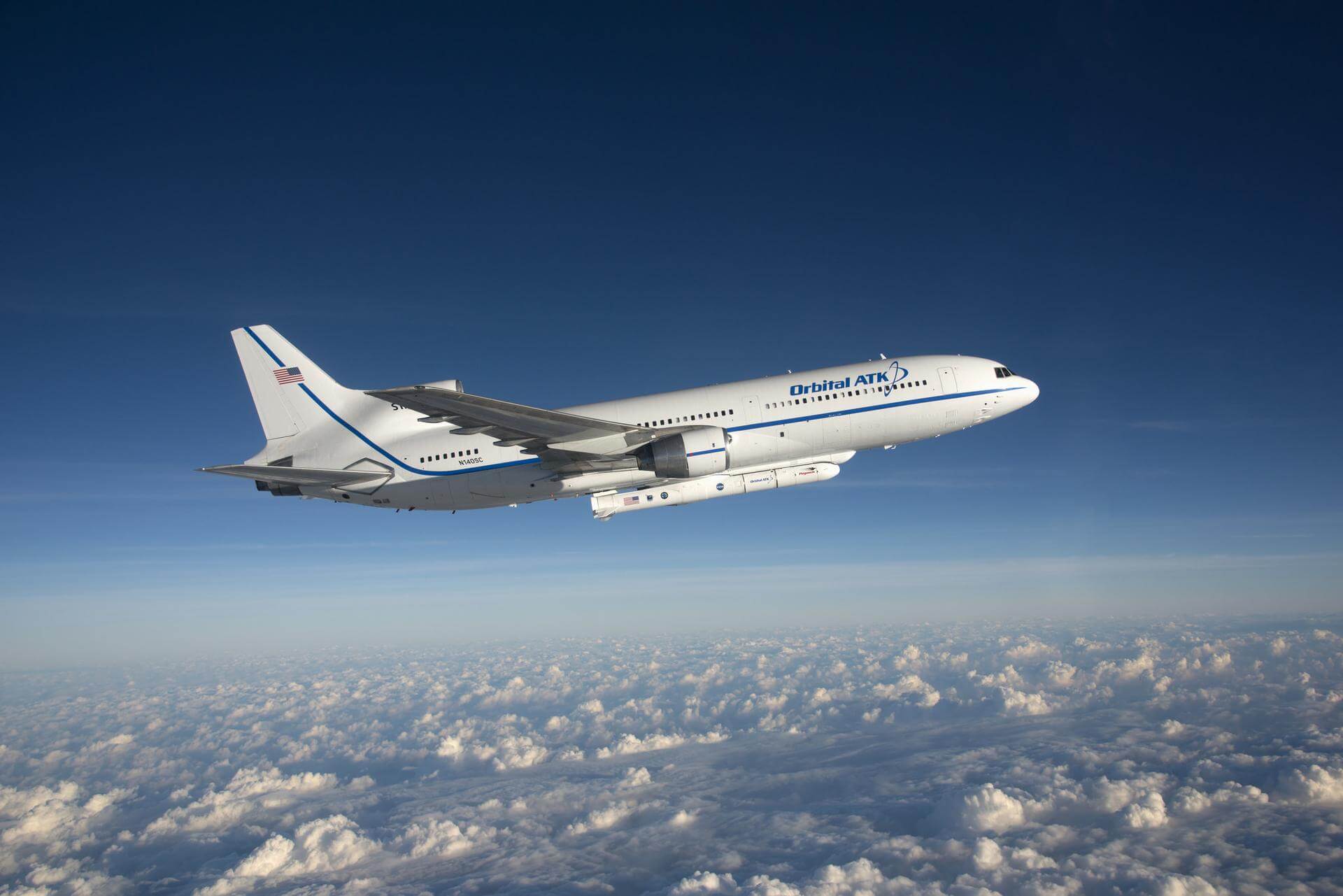
Vehicle file · LV-173
Pegasus XL
Pegasus XL is an expendable orbital launch vehicle built by Orbital Sciences Corporation. It stands 17.6 m tall, lifts 443 kg to low Earth orbit, first flew on 27 June 1994. It has flown 32 times with 29 successes, a success rate of 90.6%. It has no flight on the public manifest at the moment.
Specification
Vehicle spec sheet
Flight record
Reliability
About Pegasus XL
The Pegasus is an air-launched rocket developed by Orbital Sciences Corporation (now part of Northrop Grumman Innovation Systems). Capable of carrying small payloads of up to 443 kilograms (977 lb) into low Earth orbit, the vehicle consists of three solid propellant stages and an optional monopropellant fourth stage. Pegasus is released from its carrier aircraft at approximately 40,000 ft (12,000 m), and its first stage has a wing and a tail to provide lift and attitude control while in the atmosphere.
Upcoming flights
Manifest
No Pegasus XL flight is filed in the current manifest window. Missions appear here the moment a launch date is published.
All upcoming launchesCommon questions
- How many times has Pegasus XL flown?
- Pegasus XL has flown 32 orbital missions, with 29 successes and 3 failures.
- What is Pegasus XL's success rate?
- Pegasus XL has a success rate of 90.6%, from 29 successful flights out of 32 attempts.
- When is the next Pegasus XL launch?
- Pegasus XL has no flight on the public manifest at the moment. Scheduled missions appear here as soon as a launch date is filed.
- How much can Pegasus XL lift to orbit?
- Pegasus XL is rated for 443 kg to low Earth orbit and 0 kg to geostationary transfer orbit. These are the operator's published maximums and assume an expendable or fully optimised configuration.
- Is Pegasus XL reusable?
- No. Pegasus XL is expendable: every stage is discarded during flight and nothing is recovered for reflight.